

1. Appearance (Looks)
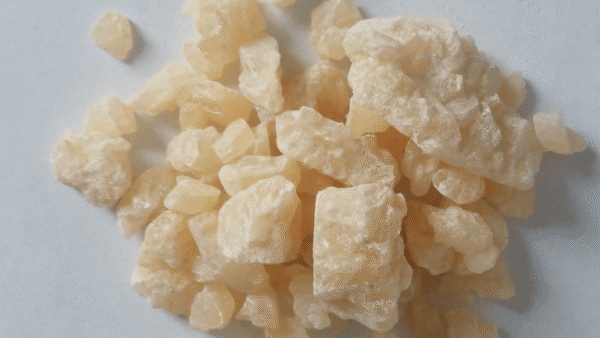
- Structure: High-purity MDMA typically appears as translucent to white shards or “rocks” that resemble rough quartz or large granules of sea salt.
- Color Variations: While pure MDMA is white or clear, street “pure” crystals frequently have a light tan, “champagne,” or yellowish tint. This coloration is usually due to leftover chemical precursors (like sassafras oil) or impurities from the synthesis process.
- Texture: The crystals are hard and must be crushed into a fine powder for consumption. When finely ground, the powder appears off-white or light grey.
2. Odor (Smell)
- Signature Scent: Pure MDMA is famously reported to have a faint, distinctive smell of sweet black licorice or anise.
- Source of Smell: This scent comes from safrole, a precursor used in traditional manufacturing.
- Purity Indicators: Ironically, truly pure MDMA hydrochloride should have almost no odor. A very strong chemical smell (like ammonia or bleach) often indicates poorly washed crystals or the presence of solvents and byproducts.
3. Taste
- Flavor Profile: It has an intense, sharp chemical bitterness. Many users describe it as having an acrid or metallic “burn” that lingers on the tongue.
- Physical Sensation: Because it is caustic, placing crystals directly on the tongue can cause a tingling or slight numbing sensation.
4. Purity and Risks
- The 84% “Maximum” Myth: You may hear claims that MDMA can only be “84% pure.” This is a chemical technicality regarding the MDMA molecule versus the salt form (HCl) it is usually sold in. In practical terms, high-quality crystals can be ~90%+ pure.
- Mis-selling: Crystalline substances like Eutylone (bath salts) are frequently sold as “pure MDMA” because they look nearly identical.
- Testing: Visual inspection is not a reliable way to determine purity. Verification requires reagent test kits (e.g., Marquis, which should turn dark purple/black) or professional laboratory analysis.


Reviews
There are no reviews yet.